


The Assessment of Academic Attainment in my biology class plays a crucial role in enhancing my students' learning by providing a clear picture of their understanding and mastery of the subject matter. My assessment strategy is designed to include and address the three academic levels of my students: high achievers, average learners, and those who need additional support, ensuring inclusivity and fairness. Through the use of diverse assessment tools such as quizzes, practical experiments, group discussions, and digital platforms like Nearpod and Socrative, I can evaluate their conceptual grasp and application skills effectively. These tools enable me to provide differentiated feedback, catering to the unique needs of each academic level while identifying areas requiring improvement. Moreover, the assessments are aligned with learning objectives to promote critical thinking, scientific inquiry, and application-based learning, which are essential for their academic and personal development. By continuously refining these tools, I aim to create an engaging and supportive learning environment where all students, regardless of their starting point, can thrive and excel.
Inclusive, well-designed assessments ensure equitable learning and promote meaningful academic growth







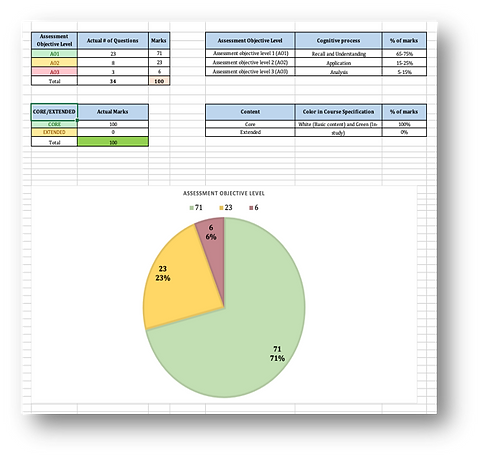
I ensure precise measurement of learning outcomes by using a Table of Specification (TOS), which clearly outlines each Key Performance Indicator (KPI) or objective. The TOS specifies the number of marks allocated to each objective and the cognitive level required to assess it, ensuring alignment with the students' varying levels of understanding. By structuring assessments in this way, I can tailor them to reflect a range of student capabilities, from basic recall to higher-order thinking, thus accurately measuring their mastery of the intended learning outcomes.



__________________________________________________________
In Biology courses, we have a course specification that outlines the key performance indicators (KPIs) for each lesson, along with the number of periods dedicated to each topic. Based on this structure, I design assessments and identify the relevant KPIs for students in advance, ensuring they are well-prepared for their tests and that the evaluation is accurate and aligned with the course objectives.


In many of the assessments I create, I use rubrics to clearly explain what is expected in assignments or projects. The rubrics detail the specific criteria for success and show how each part of the work connects to the learning goals of the course. I share these rubrics with my students before they begin their work, so they understand exactly what they need to do to succeed. This method ensures that the grading is consistent and fair, providing clear guidance for the students. By using rubrics, I maintain a transparent and structured approach to evaluation, helping students feel confident in their understanding of the expectations.
__________________________________________________________


__________________________________________________________
The grade book we use is an essential tool for tracking student performance and ensuring accurate assessment. It includes a detailed mark scheme for all assessments, providing a clear breakdown of how scores are distributed across different tasks and objectives. Additionally, the grade book offers a comprehensive analysis of students' marks per class, allowing me to monitor their progress over time and identify trends in performance. This data, including passing rates and areas of improvement, enables me to adjust my teaching strategies and refine future exams. By understanding student performance at a specific level, I can create more targeted and effective assessments that better reflect their learning and ensure fair and meaningful evaluation.




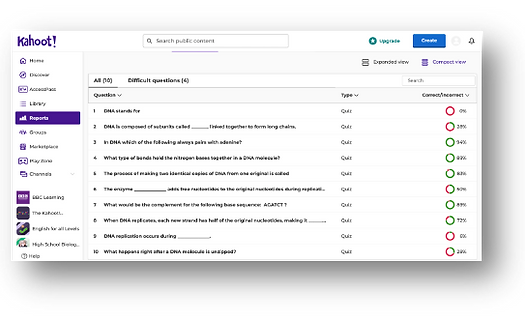
Using digital tools like Google Forms, Socrative, and Quizizz for testing offers significant advantages in terms of accuracy and efficiency. These platforms automatically grade responses, ensuring quick and reliable results without the risk of human error. They also provide detailed analytics, such as individual student performance, question-wise statistics, and overall class trends. This data allows for a deeper understanding of students' strengths and areas for improvement


__________________________________________________________
In my classroom, I use both Edpuzzle and Kahoot! to make learning more engaging and interactive for my students. With Edpuzzle, I can turn videos into dynamic lessons by embedding quizzes, polls, and notes. This not only helps students stay engaged as they watch but also allows me to track their progress in real-time. I can see which concepts they understand well and which areas need more attention, allowing me to adjust my teaching accordingly. On the other hand, I incorporate Kahoot! to add some fun and competition to the learning process. The students love the gamified quizzes, and it gives me immediate feedback on how they’re doing.






I monitor my students' performance using both my own Excel sheet and the school's gradebook. The Excel sheet allows me to track detailed information and make personalized analyses, while the gradebook provides a comprehensive overview of each student's progress. It includes important data like averages, percentages, passing rates, and individual student progress. This combined approach helps me ensure that I am closely tracking their performance and making informed decisions to support their growth.





After monitoring my students' performance in their assessments by analyzing their grades, I identified the areas where each student needed improvement and provided targeted support. Using various techniques such as one-on-one discussions, peer learning, and tailored practice exercises, I worked closely with them to strengthen their understanding of challenging concepts. Additionally, I developed personalized action plans for each student, outlining specific goals and strategies to help them progress. These action plans served as a roadmap, ensuring that students remained focused and motivated while addressing their individual needs effectively. Through this approach, I aimed to empower my students to achieve their full potential.
__________________________________________________________


__________________________________________________________
Yes, monitoring students' performance is essential, but it’s equally important to start by building a positive exam environment that supports students during their tests. Creating a calm, organized, and encouraging atmosphere helps reduce anxiety and enables students to focus better. To effectively monitor performance, we can use various techniques, such as sharing their results with them and discussing their progress. This approach fosters accountability and gives students full responsibility for their learning journey. Additionally, incorporating digital tools can enhance the process; for example, displaying the test on a board allows students to review their mistakes collectively, promoting a deeper understanding and encouraging collaborative learning.


I am not solely focused on evaluating my students' academic performance; my approach also emphasizes developing various skills they will need in the future and in their careers. I work on enhancing their cognitive skills, such as thinking, reasoning, and problem-solving, which are essential for tackling challenges in any field. Additionally, I focus on their social and emotional skills, helping them learn how to communicate effectively, especially when presenting their work. I also guide them in managing their emotions, teaching them how to stay composed and confident in different situations, which is crucial for success in both personal and professional environments.


_______________________________________________________________
I train my students to present their work confidently on stage by creating a supportive and encouraging environment where they can practice and build their presentation skills. I guide them in preparing their content thoroughly, helping them organize their thoughts and express them clearly. Through regular practice, I encourage them to rehearse in front of small groups before presenting to the whole class, which helps reduce anxiety. I also provide constructive feedback, highlighting their strengths and offering tips for improvement. By gradually increasing their exposure to public speaking and fostering a sense of accomplishment with each presentation, I help them gain the confidence to present their work with pride and without feeling shy.

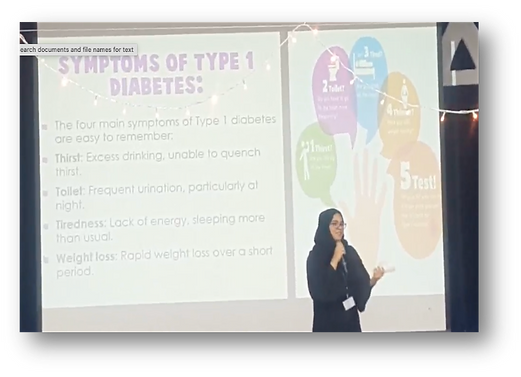



I made sure to follow up with each of my students individually, offering support to answer any questions they had and to clear up any doubts they might have about the lessons. This personalized approach allowed me to address their specific concerns, provide additional explanations when needed, and ensure they fully understood the concepts. By maintaining open communication, I was able to foster a learning environment where students felt comfortable seeking help, which ultimately helped them succeed in their studies.


_______________________________________________________________
I value my students' feedback and ensure it is integrated into my teaching practices to support their continuous improvement. After each lesson, I use exit tickets to gather individual insights about their understanding and challenges. Additionally, when students complete written homework, I provide personalized feedback to address their specific needs and guide their progress. To make feedback more interactive, I utilize tools like Padlet, polls, and sticky notes, which students use to share their thoughts, questions, or suggestions in a quick and creative way. These strategies enable me to identify areas that require improvement and make the necessary adjustments to my lessons, ensuring a tailored and effective learning experience for every student.


Student feedback is essential for improving teaching and learning. It helps tailor lessons, address challenges, and provide resources that meet their needs, which is why I use this technique primarily when it’s most beneficial. Listening to students' perspectives fosters a collaborative learning environment where their voices are valued.


_______________________________________________________________


To deepen my students' understanding of the material, I am creating educational videos that provide thorough explanations and solutions to problems. While it takes a considerable amount of time and effort, the satisfaction I gain from delivering content that enhances their learning makes it all worthwhile. These videos not only support their studies but also ensure they grasp key concepts more effectively, which is truly rewarding.


_______________________________________________________________
To promote a deeper understanding of the material, my students engage in group collaboration, where they discuss, brainstorm, and analyze concepts together. This collaborative approach encourages critical thinking and allows them to explore different perspectives. In addition to that, taking them to the lab and guiding them through various experiments further enhances their knowledge by providing hands-on experience. Practical work not only reinforces theoretical learning but also helps students develop problem-solving skills and a deeper connection to the subject matter.


_______________________________________________________________


Taking my students on educational field trips significantly enhances their understanding and deepens their knowledge. These trips provide real-world connections to the concepts they learn in the classroom, offering them the opportunity to observe and experience the material in action. By engaging with experts, exploring relevant sites, and participating in interactive activities, students gain a richer, more practical understanding of the subject matter. Educational field trips also foster curiosity and critical thinking, encouraging students to ask questions, analyze their surroundings, and reflect on their learning in a meaningful way. Ultimately, these experiences make the content more tangible, memorable, and impactful.


By attending workshops and participating in professional development sessions (PDs) related to assessment and attainment, as well as collaborating with publishers to enhance my knowledge of the curriculum, I demonstrate my commitment to continuous learning and improving my craft. This dedication plays a vital role in building strong, effective assessments that align with educational goals and standards. These experiences contribute to my personal growth and reflect my ongoing efforts to enhance my skills and make a meaningful impact in my field.



_______________________________________________________________
By actively engaging in opportunities for growth and earning various certificates of appreciation, I demonstrate my commitment to continuous learning and improving my craft. This dedication has played a key role in my being selected as one of the finalists for the Mariamma Varkey Award and supports my application for the Khalifa Award as well. These experiences reflect my ongoing efforts to enhance my skills and make a meaningful impact in my field, contributing to my personal development and my drive for excellence.


Attending a variety of professional development sessions (PDs) and workshops, both online and in-person, has significantly enhanced my skills in assessment and analysis of exam results. These experiences have provided me with valuable insights into the latest trends, tools, and strategies for evaluating student performance effectively. By improving my ability to analyze data and interpret results accurately, I have gained a deeper understanding of how assessments can drive student progress. This expertise, combined with the leadership skills I have developed through these opportunities, has empowered me to take on the role of assessment lead for biology in Applied Technology Schools. In this capacity, I am responsible for writing and reviewing exams, ensuring they are aligned with curriculum objectives and rigorously evaluate students’ understanding.

